Lybrary
A social app for making libraries cool again. A mobile-first platform transforming libraries into community-driven, socially engaging spaces for digital-native users.
Lybrary is a social library platform designed to increase engagement among younger, digitally native audiences.
Lybrary explores how libraries can evolve within a digitally dominant ecosystem. While libraries remain culturally significant, their engagement models have not kept pace with user expectations shaped by platforms like social media, streaming, and on-demand services.
The project investigates how digital augmentation + social interaction layers can reposition libraries as relevant, inclusive, and desirable third spaces. While libraries successfully operate as free, community-driven spaces for children and families, they fail to deliver equivalent value for adult users—resulting in under-engagement from a key demographic.
Role
Product Designer (End-to-End UX Research + Design)
Timeline
2 months
Team
Solo Project
Tools
Figma, FigJam
What I did…
Led end-to-end UX research and product design
Conducted mixed-method research (qual + observational + secondary)
Synthesized insights into personas, journeys, and opportunity spaces
Defined product strategy and feature set
Designed low → mid → high fidelity prototypes
Built a scalable design system
Problem Statement
Despite strong infrastructure and cultural relevance, modern libraries face:
Declining engagement among teen and adult users
Perception as outdated or functionally limited
Lack of integration between physical and digital experiences
Underutilization as social/community environments
Design Challenge
How might we reimagine libraries as digitally enhanced, socially engaging ecosystems that align with modern user behaviors and expectations?
Guiding Framework
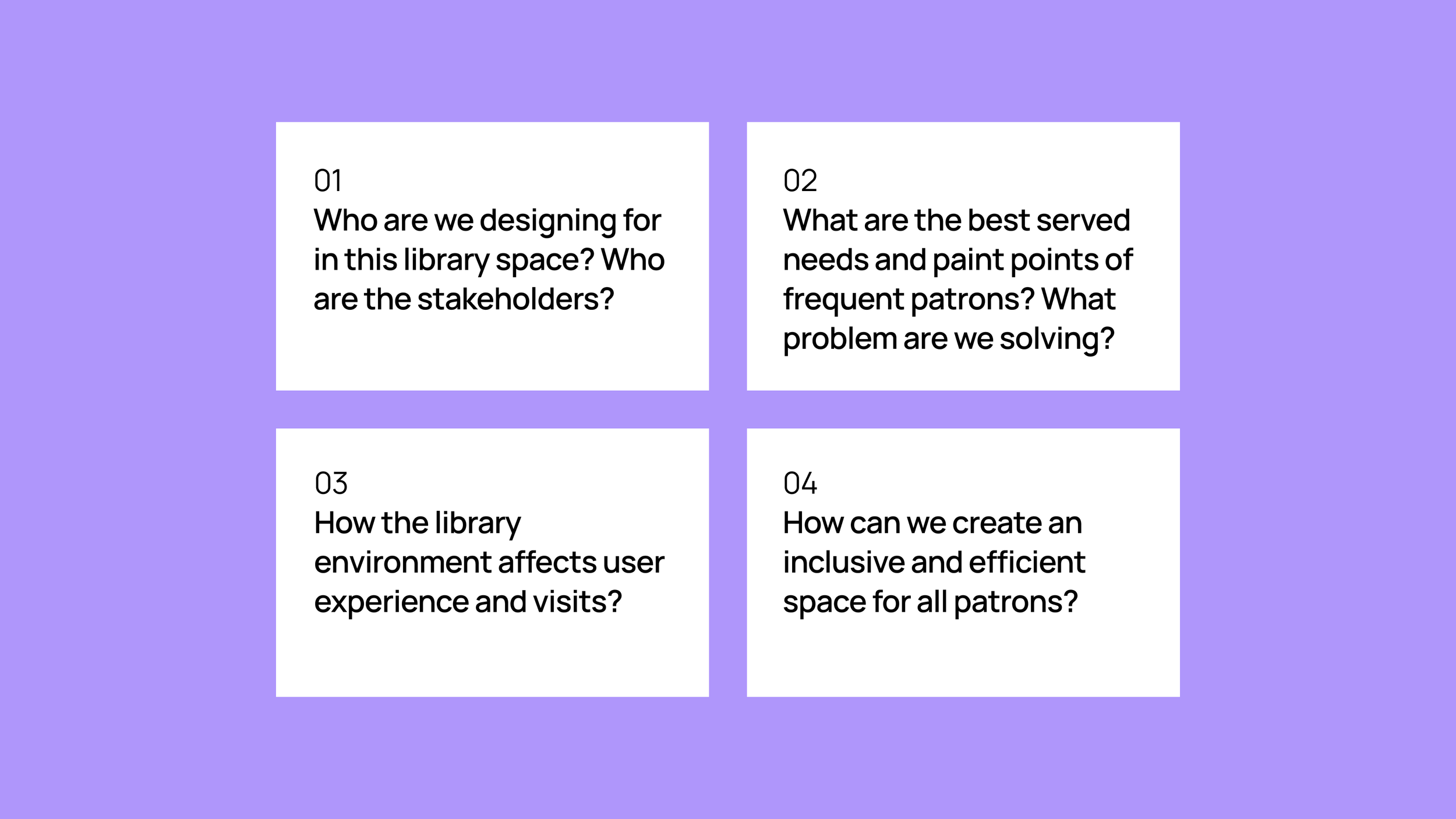
To initiate the research process, I formulated four guiding questions to identify design opportunities.
Research Approach
A multi-layered research framework combining attitudinal + behavioral insights:
-
Analysis of Yelp, Google, App Store reviews
Review of QPL website and media coverage
Competitive benchmarking (Fable, Vinylly, Book of the Month)
Goal: Understand perception gaps and digital experience benchmarks
-
Conducted in-situ at Queens Public Library, Hunter’s Point
Observed:
Space usage patterns
Navigation behaviors
Social vs functional usage
Key Finding:
Users often occupy the library for ambient presence (reading, relaxing, socializing) rather than structured tasks. -
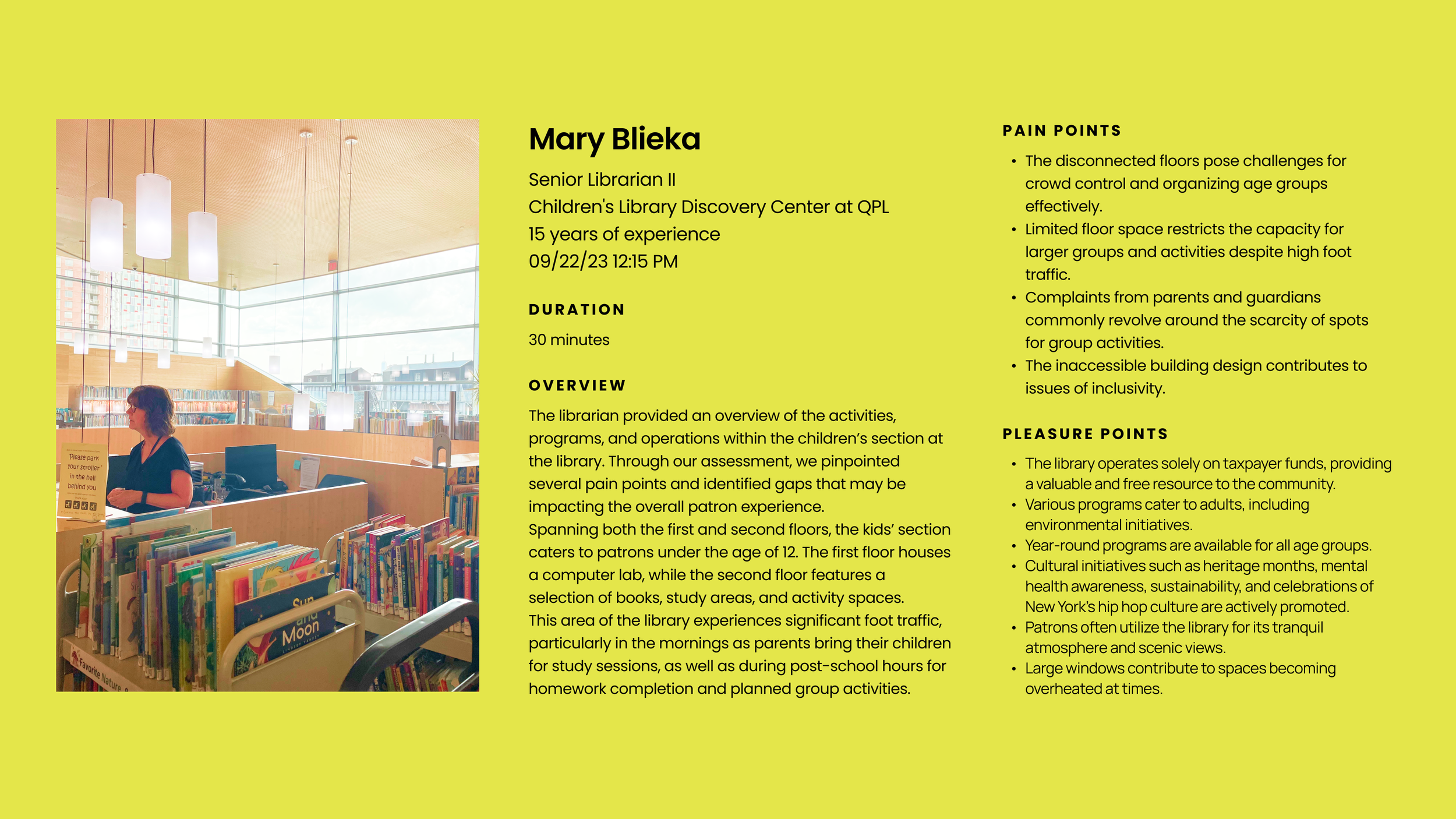
15+ years experience, children’s section
Key Pain Points Identified:
Spatial constraints vs high footfall
Accessibility gaps
Poor crowd segmentation
Limited infrastructure for group/social activity
-
Key behavioral insights:
Libraries used for:
Leisure
Printing/utilitarian tasks
Quiet downtime
App seen as functional but underdeveloped
Lack of work-friendly or flexible spaces for adults
Field Research
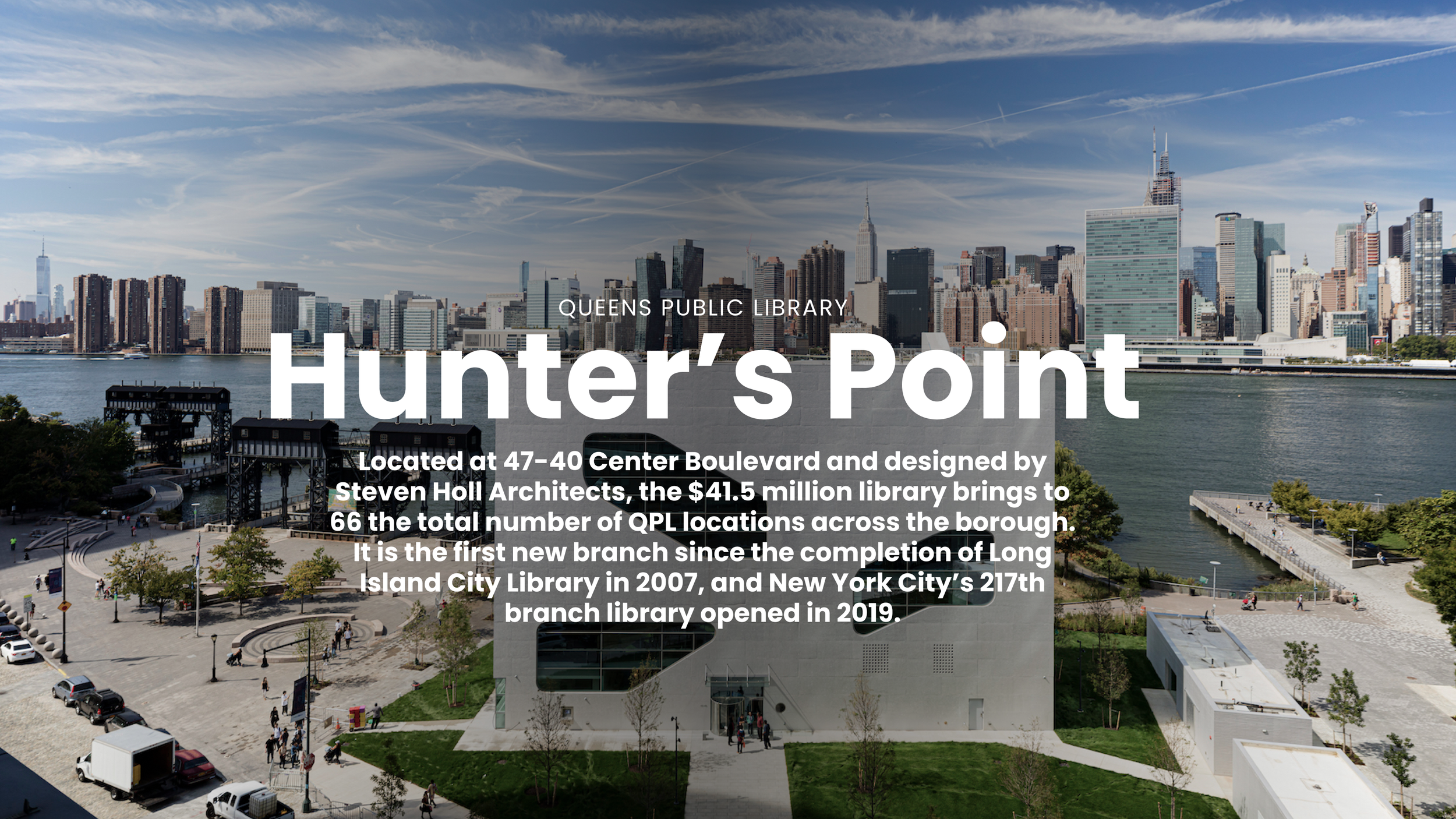
Queens Public Library, Hunter’s Point
QPL served as the foundation for our research, laying the groundwork for our project. We utilized various methods to analyze the experience at the Hunter's Point location given its trendy location and modern architecture built to attract younger generations.
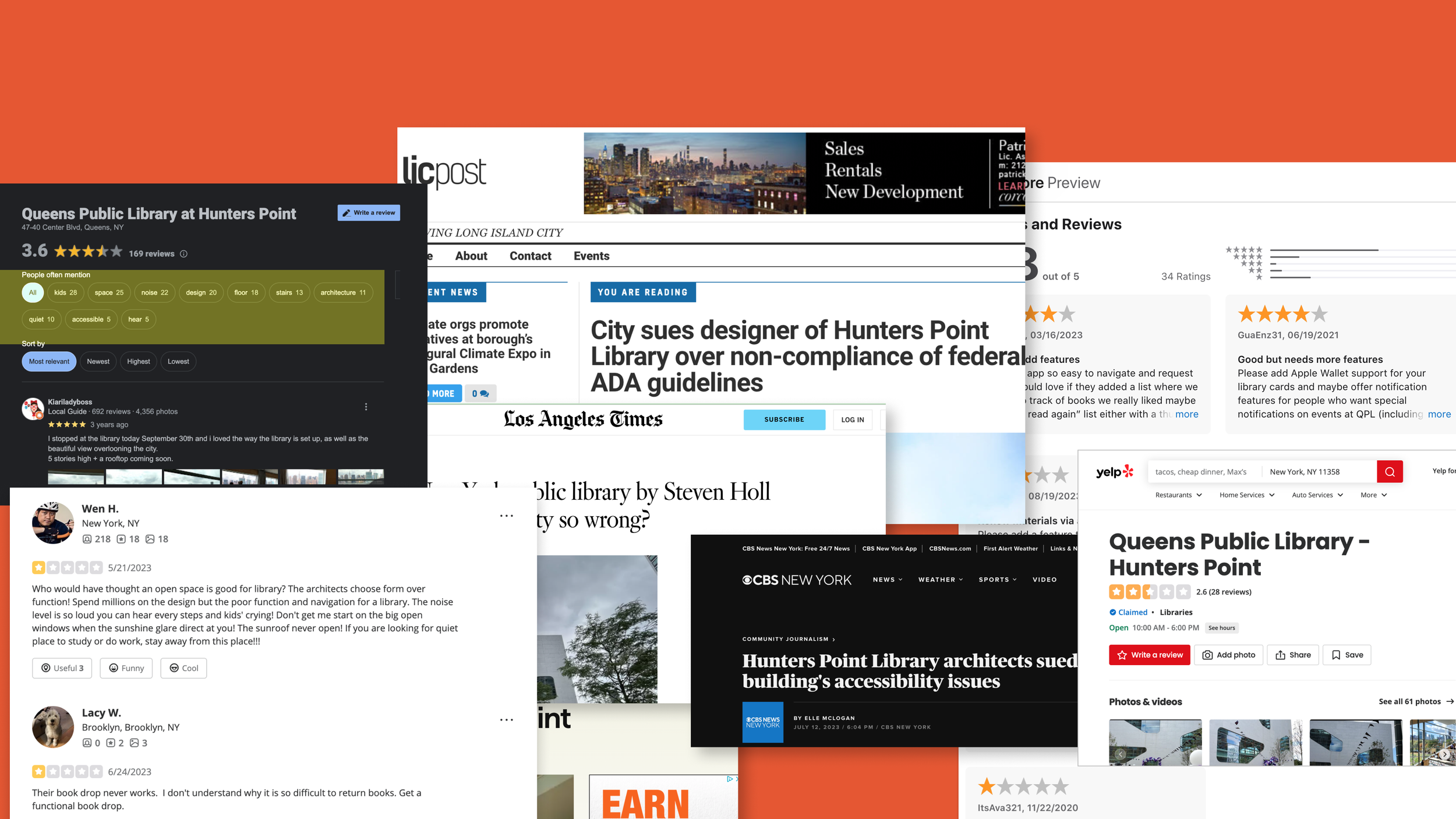
Desk Research
For secondary research, I reviewed Yelp, Google, and App Store reviews, as well as various reports, articles, and analyzed the QPL website.
A library, while still a place to get and read books, is a community hub.
Competitive benchmarking
Conducted competitive analysis across direct, indirect, and adjacent ecosystems to understand how reading, community, and social discovery are currently facilitated—and where libraries are excluded from that landscape. This included platforms such as Fable, Book of the Month, BookTok, Bookstagram, and adjacent community-driven products like Vinylly.
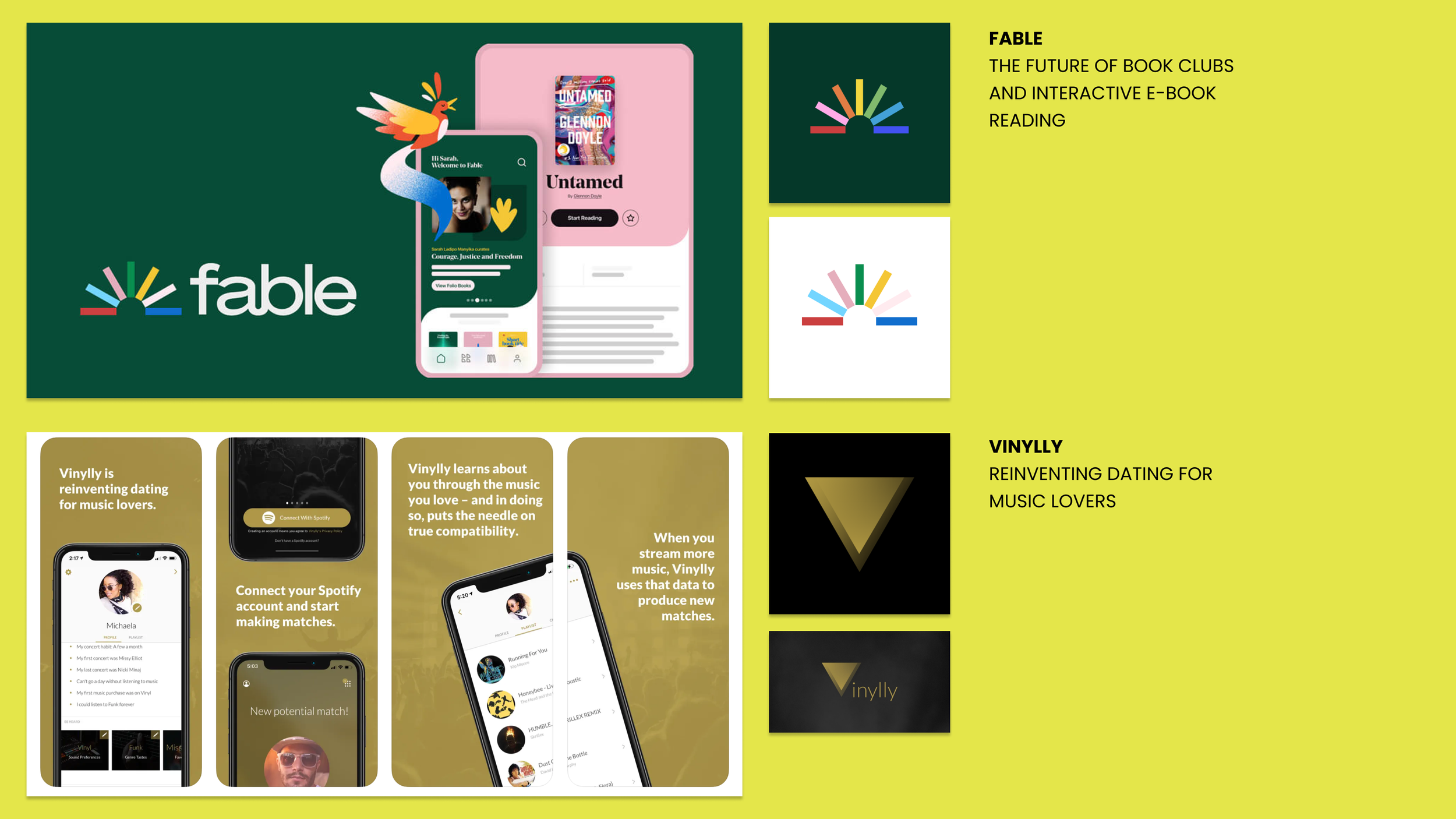
Landscape Framing & Ecosystem Analysis
-
1. Structured Reading Platforms (Utility + Community)
Examples: Fable, Book of the Month
- Provide curated discovery, book clubs, and asynchronous discussion
- Enable lightweight community interaction, but primarily within a content-first experience
- Social layer exists, but is secondary to consumption
Gap Identified:
These platforms successfully digitize reading communities but do not translate into real-world engagement or spatial interaction (e.g., libraries, meetups). -
2. Social Content Ecosystems (Discovery + Influence)
Examples: BookTok, Bookstagram
- Highly effective for:
- Trend amplification
- Discovery and virality
- Community is creator-led, not system-led
- Engagement is:
- High in visibility
- Low in depth and reciprocity
Refined Insight:
While influencers drive large-scale engagement, interactions are often broadcast-based and parasocial, limiting meaningful peer-to-peer connection. -
3. Adjacent Interest-Based Social Platforms
Examples: Vinylly (music-based matching), niche community apps
- Focus on identity-based matching (taste, interests, culture)
- Successfully create:
- Conversation starters
- Social entry points
- Translate shared interests → real-world interaction
Opportunity Signal:
Reading lacks a strong equivalent of this interest-to-connection bridge despite being inherently identity-driven.Focus on identity-based matching (taste, interests, culture)
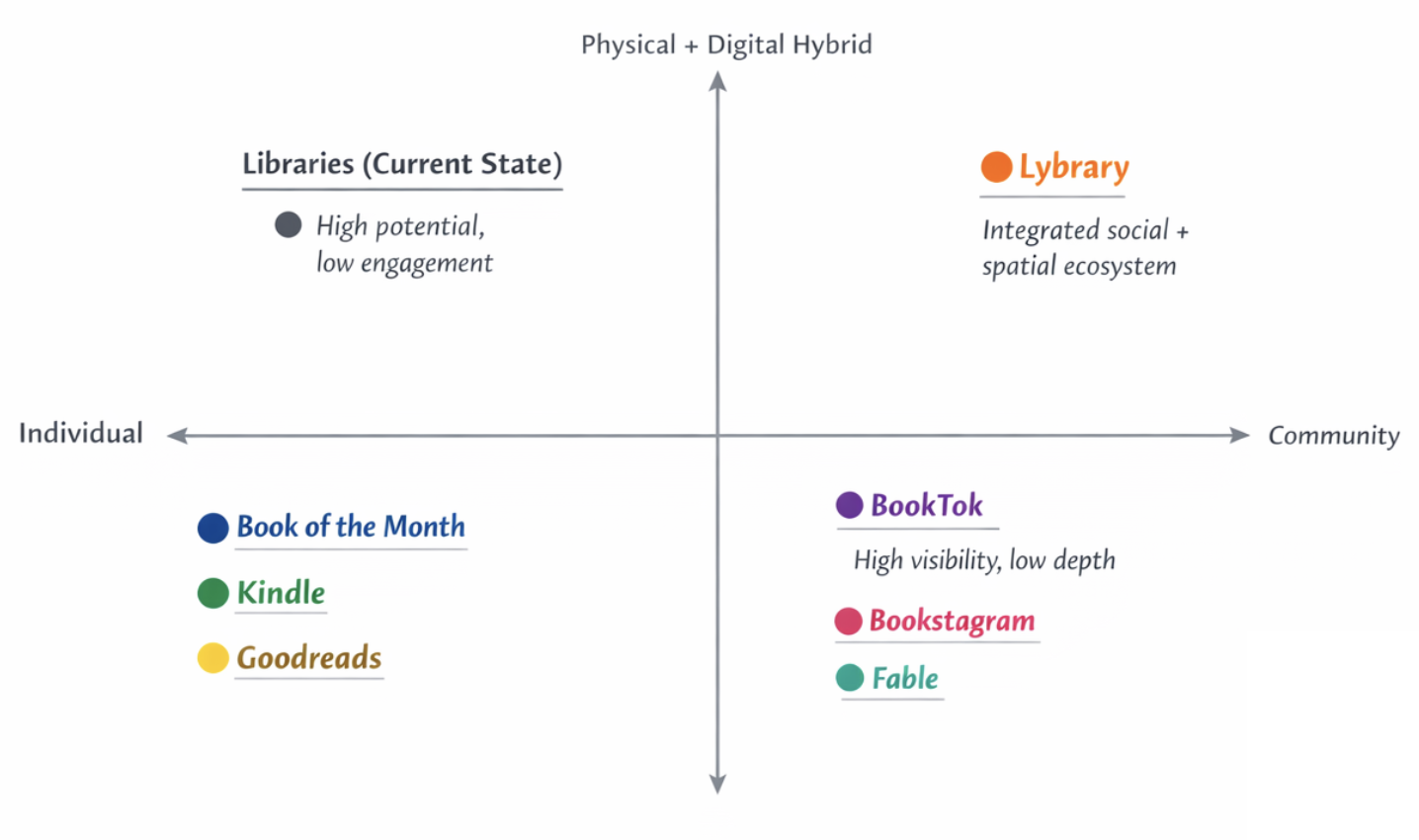
Behavioral Insights Across Ecosystem
-
Users engage with reading platforms primarily as solo, screen-based experiences, even when labeled as “community.”
-
Avid readers and researchers consistently value:
Quiet, distraction-free settings
Intimate book clubs
“Cozy” and controlled environments
This does not contradict social needs—it reflects a preference for intentional, low-noise interaction over performative socialization.
-
Informal or independent reading groups often avoid libraries
Perception issues include:
Institutional rigidity
Lack of flexible/social infrastructure
Misalignment with modern community formats
-
Even in active communities:
Connection requires high individual effort and consistency
Interactions are:
Fragmented
Episodic
Platform-dependent
Key Insight:
Digital connection ≠ social belonging -
Platforms like BookTok solve “what to read”
Platforms like Fable partially solve “who to read with”
No platform effectively solves:
→ “Where do I go to experience this together?”
Synthesis
The competitive landscape reveals a clear structural gap:
Content ecosystems → Drive discovery
Utility platforms → Enable reading
Social platforms → Enable connection
But no system integrates all three within a physical + digital hybrid environment
Strategic Opportunity
Position libraries as:
Lybrary occupies the white space between digital reading discovery and real-world community participation.
Most platforms solve for discovery or consumption in isolation. Lybrary bridges the gap by connecting digital reading behavior with real-world community experiences.
Lybrary leverages this gap by:
Translating online reading identity → offline interaction
Embedding social infrastructure into physical spaces
Converting libraries from passive venues → active community platforms
Observational Research
Conducted in-situ at Queens Public Library, Hunter’s Point
Observed:
Space usage patterns
Navigation behaviors
Social vs functional usage
Key Finding:
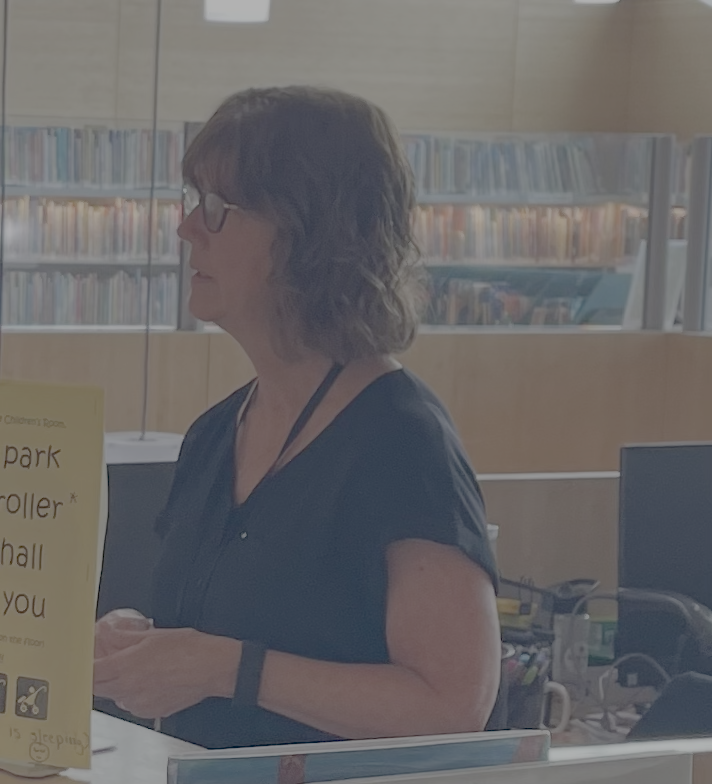
Users often occupy the library for ambient presence (reading, relaxing, socializing) rather than structured tasks.
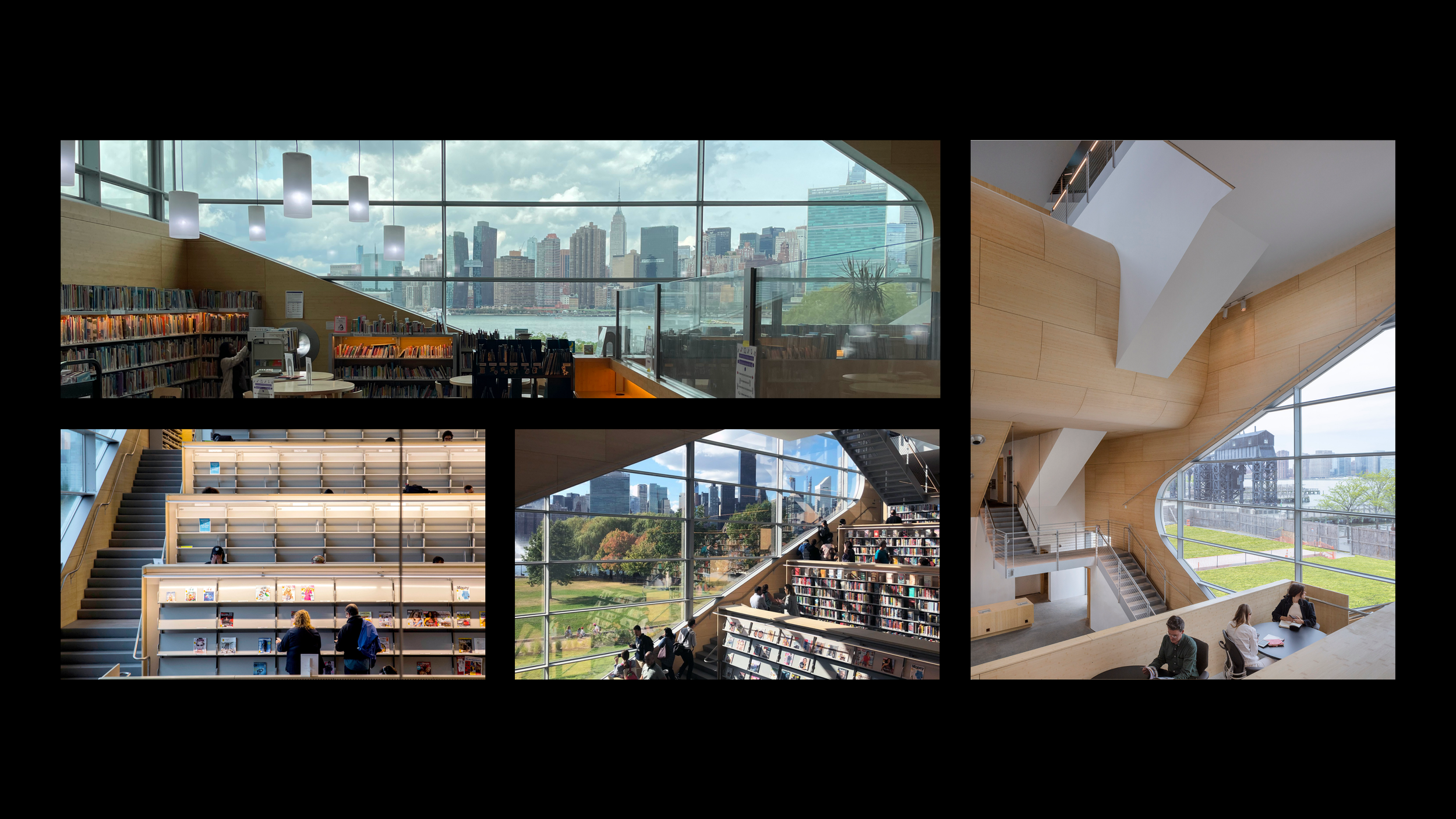
“The building design creates accessibility challenges, which impacts inclusivity.”
— Mary Blieka, Librarian at QPLSME Interview (Librarian)
Key Pain Points Identified:
Spatial constraints vs high footfall
Accessibility gaps
Poor crowd segmentation
Limited infrastructure for group/social activityHere, creativity meets opportunity.
Key Insight
Audience Imbalance in Library Usage
Libraries are already functioning as highly active community spaces—but primarily for children and families, not adults, young adults or teens. Libraries are not underutilized—they are unevenly utilized.
Design Implication:
Opportunity is not to “add community” but to rebalance and extend community infrastructure to adult users
Supporting Evidence (from SME + research):
High footfall concentrated in children’s sections
Peak usage during after-school hours and weekends
Parents report limited capacity for group activities
Adult usage is:
Functional (printing, research)
Passive (quiet reading)
Not community-driven
Interviews
-
![]()
“It feels like there’s more potential there than what’s actually happening.”
Insight: Clear gap between infrastructure and experienceDesign Direction:
Position library as a community platform, not just a resource center -
![]()
“I don’t always go to the library to work. Sometimes I just go to sit, read, or spend time quietly.”
Insight: Libraries function as third spaces, not just task-oriented environmentsDesign Direction:
Enable flexible usage modes → reading, socializing, events, passive presence -
![]()
“The children’s section sees the most activity, especially after school and on weekends.”
Insight: Libraries are already highly active community spaces—but primarily for kids and familiesDesign Direction:
Extend this community model to adults through events, programming, and social infrastructure -
![]()
“I usually go there for printing or when I need something specific.”
Insight: Adult usage is transactional, not engagement-drivenDesign Direction:
Shift from utility-only → experience-driven usage through community and personalization -
![]()
“There’s often not enough space for kids’ group activities.”
Insight: Demand for community engagement already exists and exceeds capacityDesign Direction:
Introduce space visibility, booking, and scheduling systems -
![]()
“The app helps me find books, but that’s about it.”
Insight: Digital experience is limited and non-integratedDesign Direction:
Build a holistic ecosystem → events, tracking, personalization, interaction -
![]()
“It’s not really a place I’d rely on for focused work.”
Insight: Misalignment with adult productivity and lifestyle needsDesign Direction:
Introduce quiet zones, bookable workspaces, hybrid environments -
![]()
“I wish I could check how busy it is or reserve something before I go.”
Insight: Gap in pre-visit decision-making systemsDesign Direction:
Add popular times, RSVP, calendar integration -
![]()
“I never know if I’ll actually find a good spot when I get there.”
Insight: High uncertainty in physical experience planningDesign Direction:
Real-time space availability, crowd data, and booking -
![]()
“I like being around people there, even if I’m not interacting.”
Insight: Users prefer low-pressure, ambient social environmentsDesign Direction:
Enable soft social features (events, communities, optional interaction—not forced)








Synthesis & Key Insights
-
Users perceive libraries as community hubs, not just book repositories.
-
Existing apps lack:
Real-time utility
Personalization
Booking systems
Event discovery
-
Limited quiet workspaces
Lack of collaborative environments
Operating hours misaligned with working professionals
-
Social + cultural programming is a primary driver of engagement.
-
Users expect:
Instant access
Predictive recommendations
Seamless booking and planning
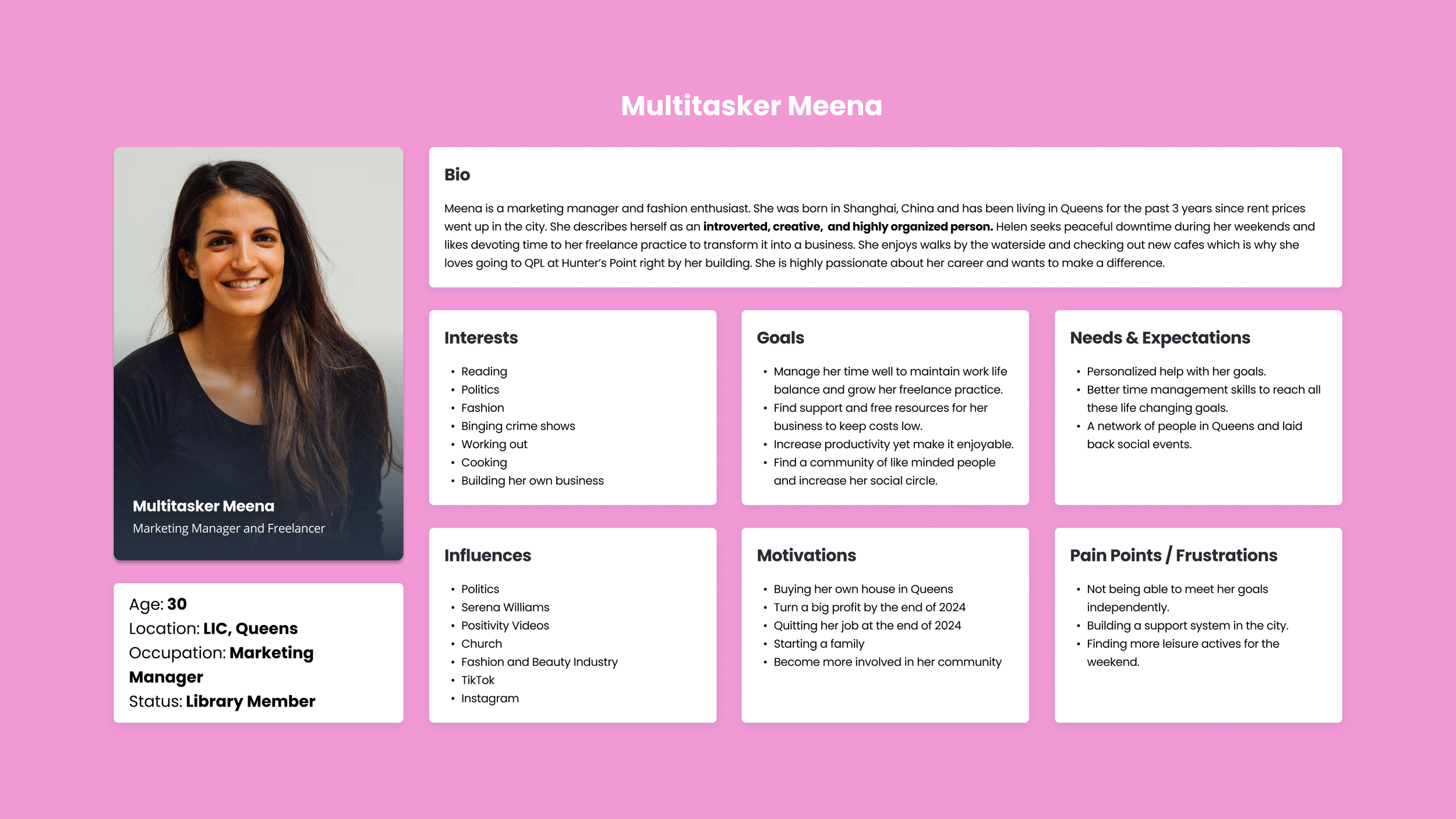
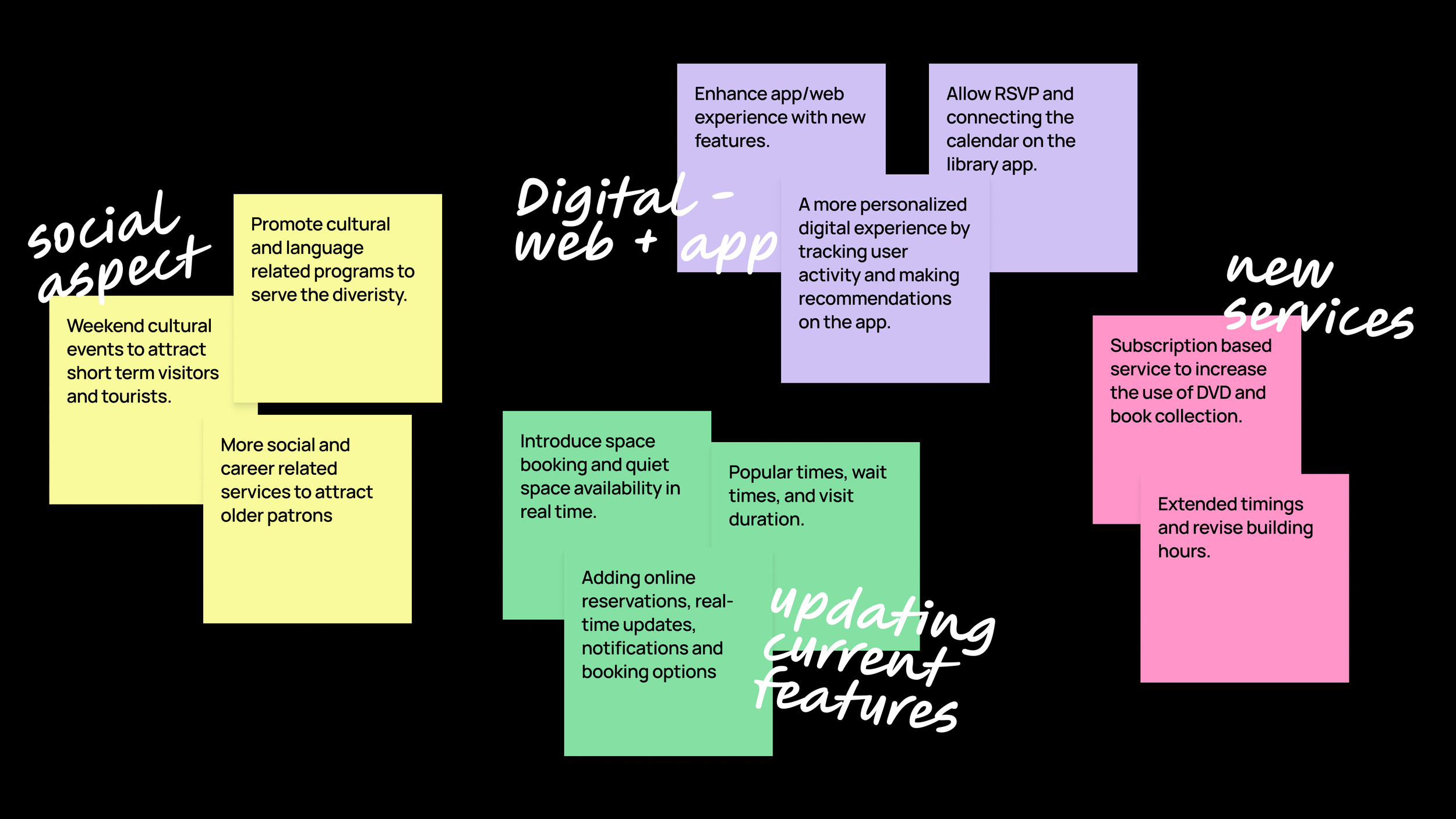
Uses the library as a flexible third space for both leisure and productivity, seeking opportunities for community, self-growth, and focused work. She values time efficiency, meaningful social connection, accessible low-cost resources, and adaptable work environments. However, uncertainty around space availability and event access often disrupts her ability to plan and fully utilize the library.
User Persona
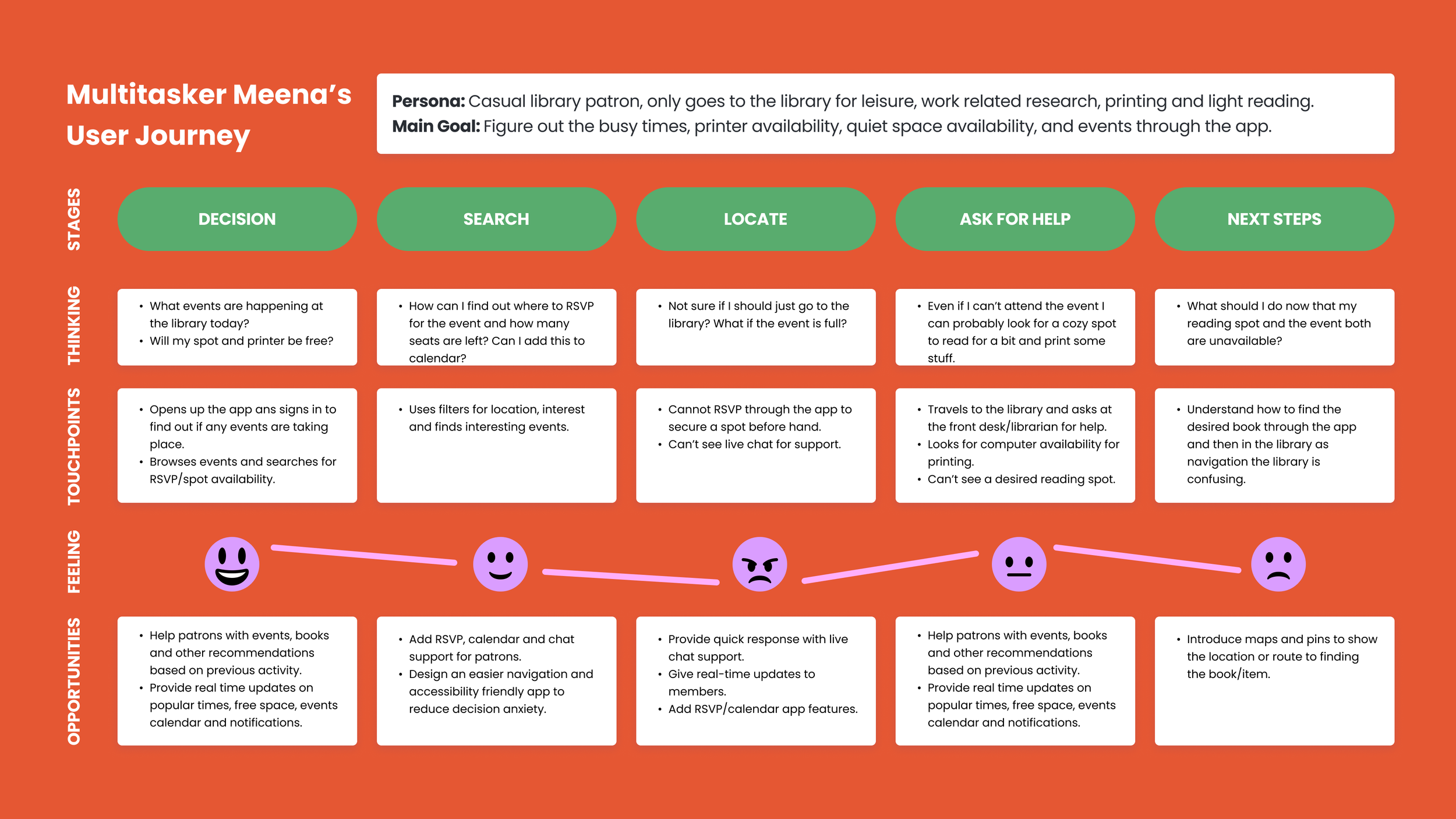
User Journey Map
Critical Friction Points
No RSVP capability
No real-time availability (space/events)
Poor wayfinding inside library
No support layer (chat/help)
Digital Layer
Real-time availability (spaces, books, events)
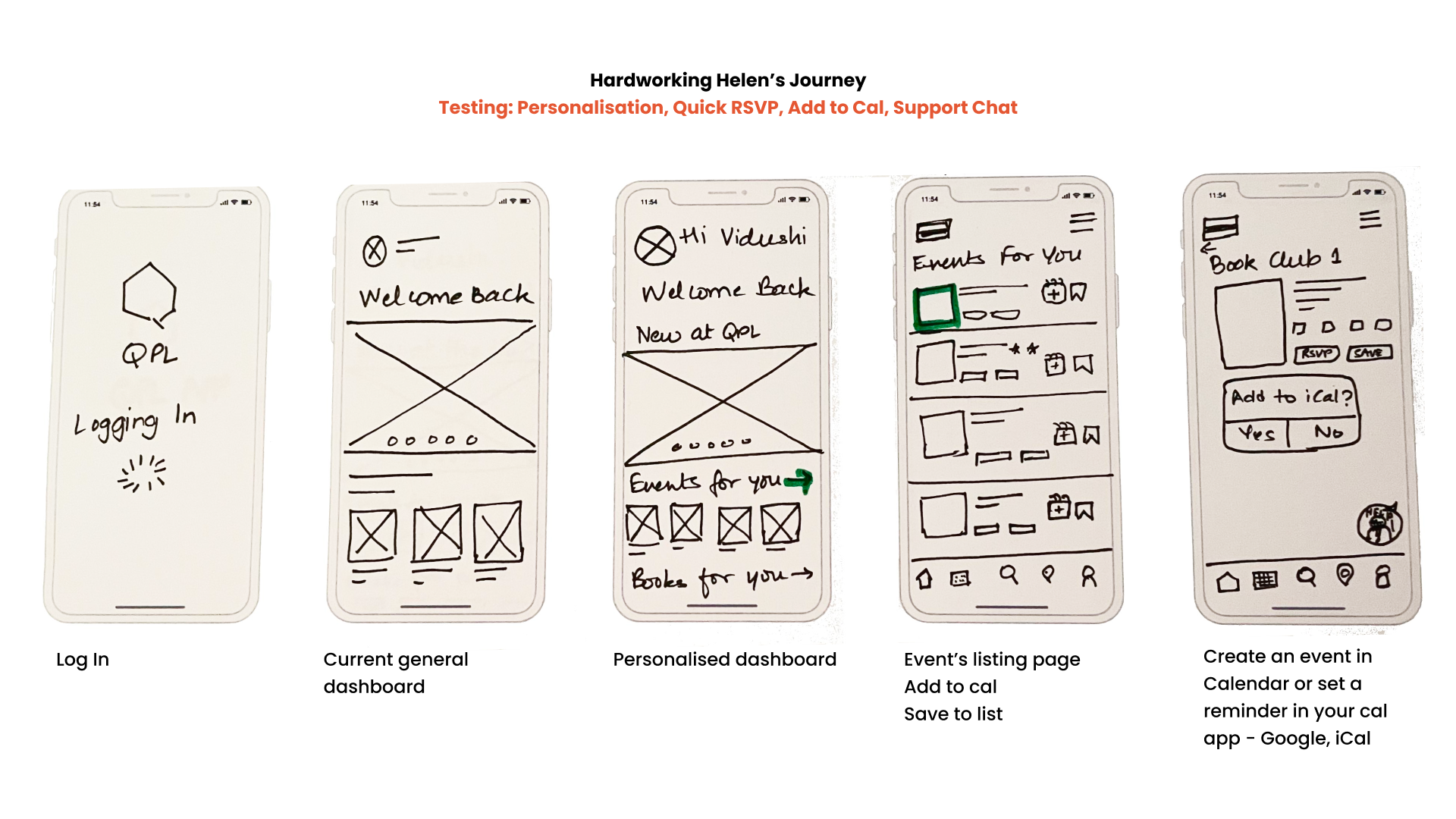
Calendar + RSVP integration
Personalized recommendations
Opportunity Area
Operational Layer
Space booking
Extended access visibility
Improved navigation + accessibility
Social Layer
Community events + networking
Interest-based discovery
Social matching (non-dating positioning refinement)
Solution: Lybrary
A mobile-first social + utility platform that connects:
People ↔ People
People ↔ Space
People ↔ Knowledge
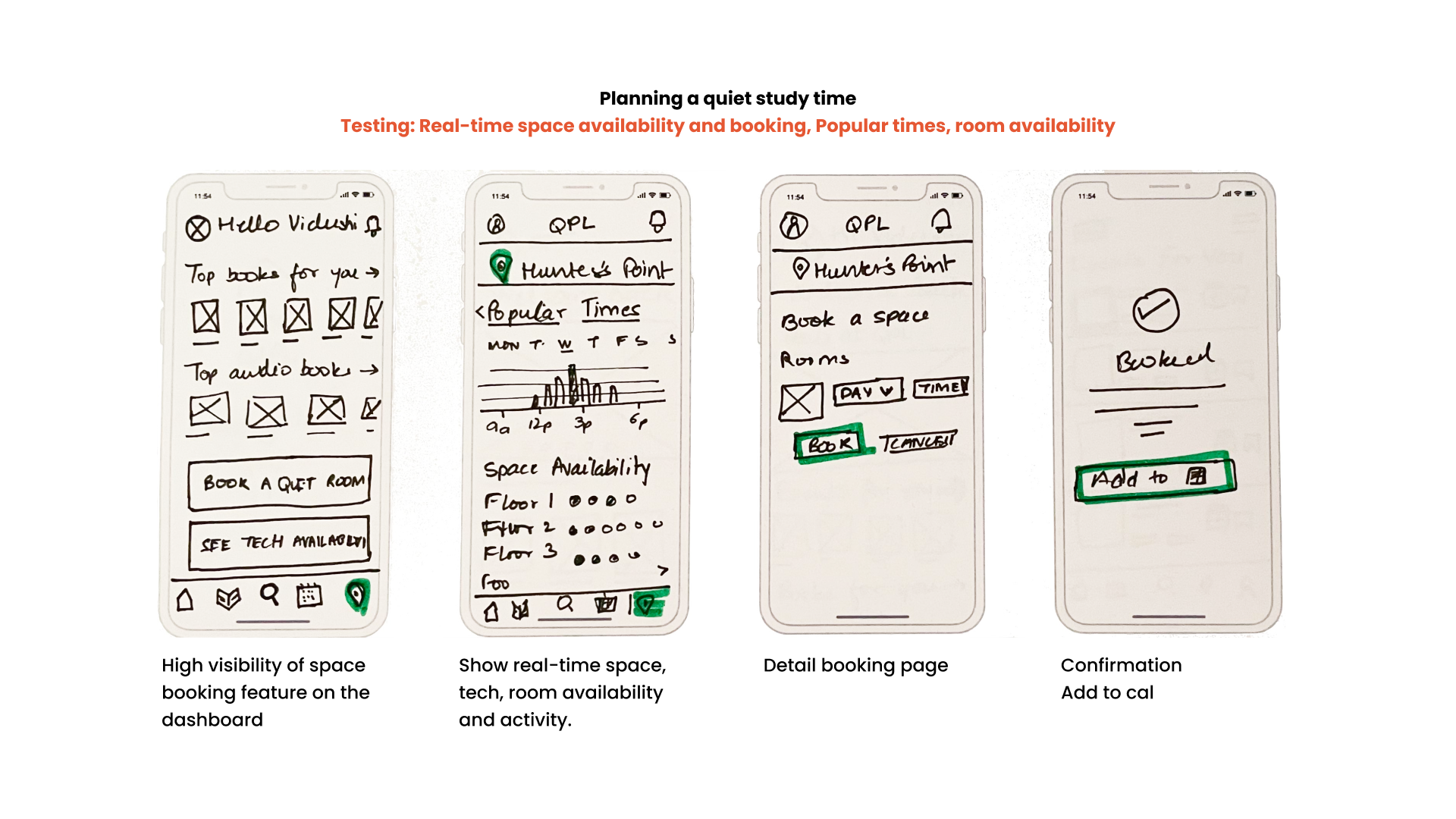
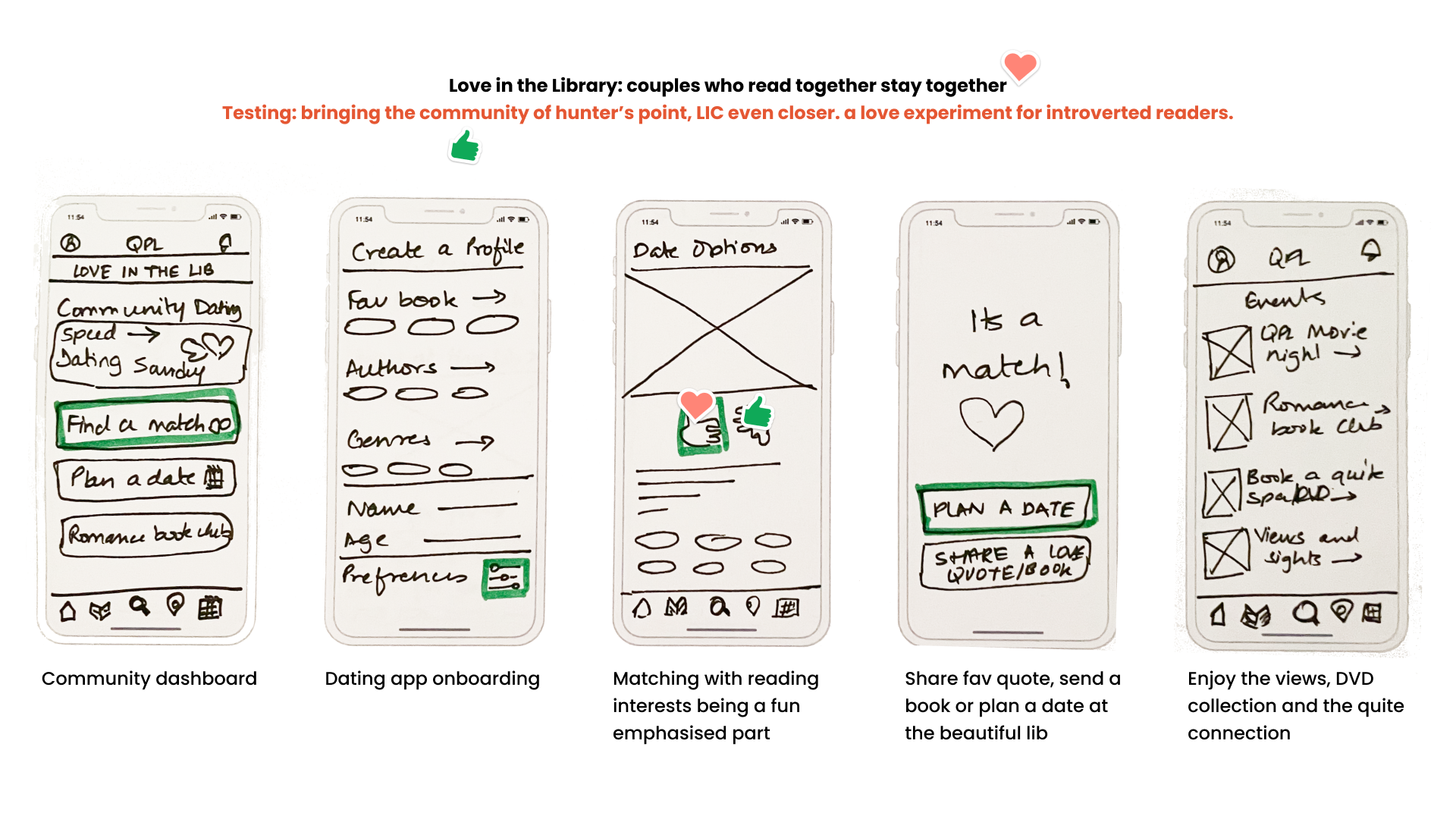
Concept Testing
1. Real-Time Library Intelligence
Space availability (rooms, seating, tech)
Popular times + crowd density
Resource availability
4. Personalized Dashboard
Recommendations based on:
Reading history
Events attended
Interests
2. Event Ecosystem
Discover, RSVP, and save events
Calendar sync
Notifications
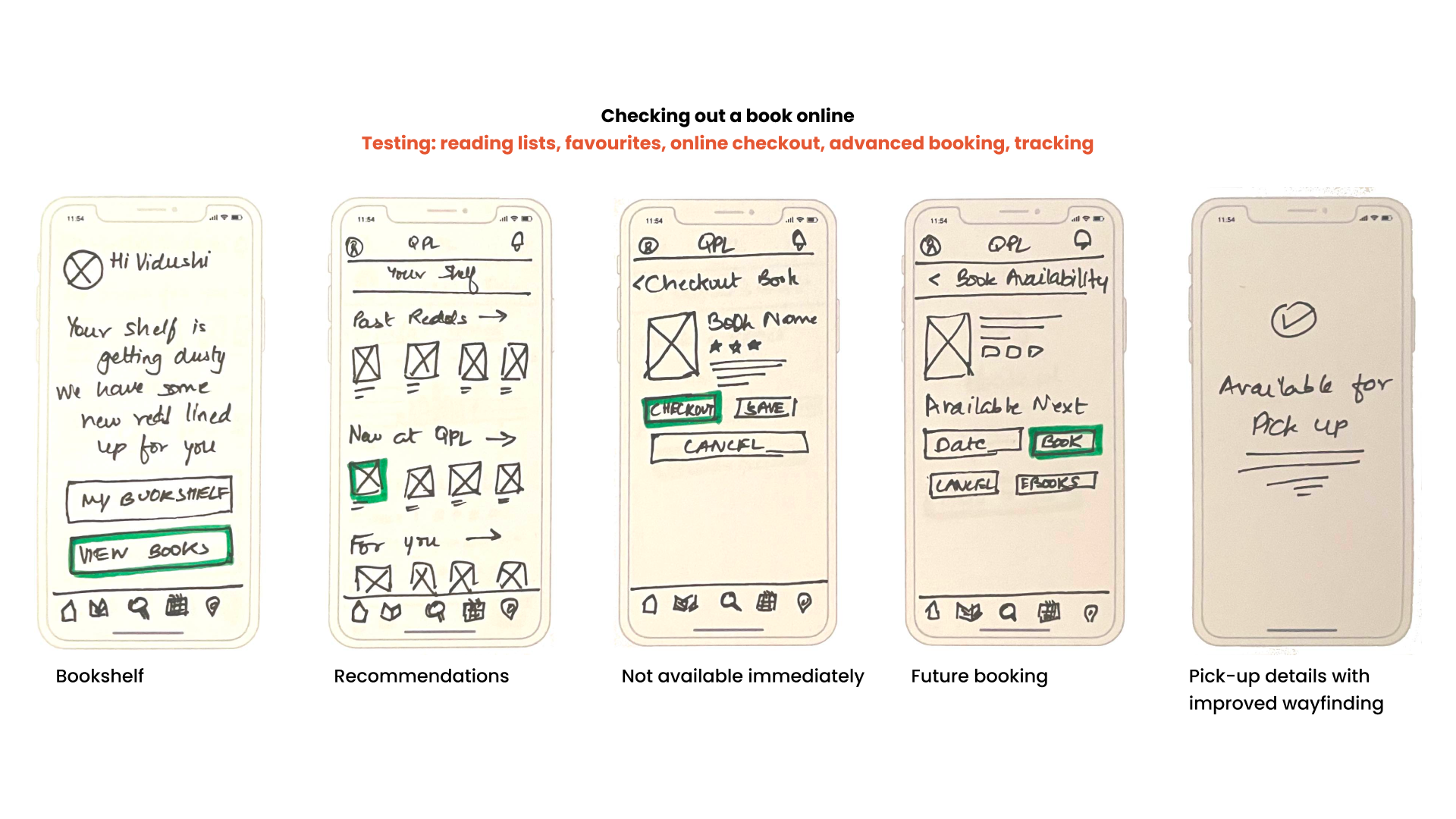
5. Book Discovery & Access
Smart search + availability
Future booking
Pickup navigation
3. Community Layer
Interest-based connections
Social discovery (book clubs, meetups, niche communities)
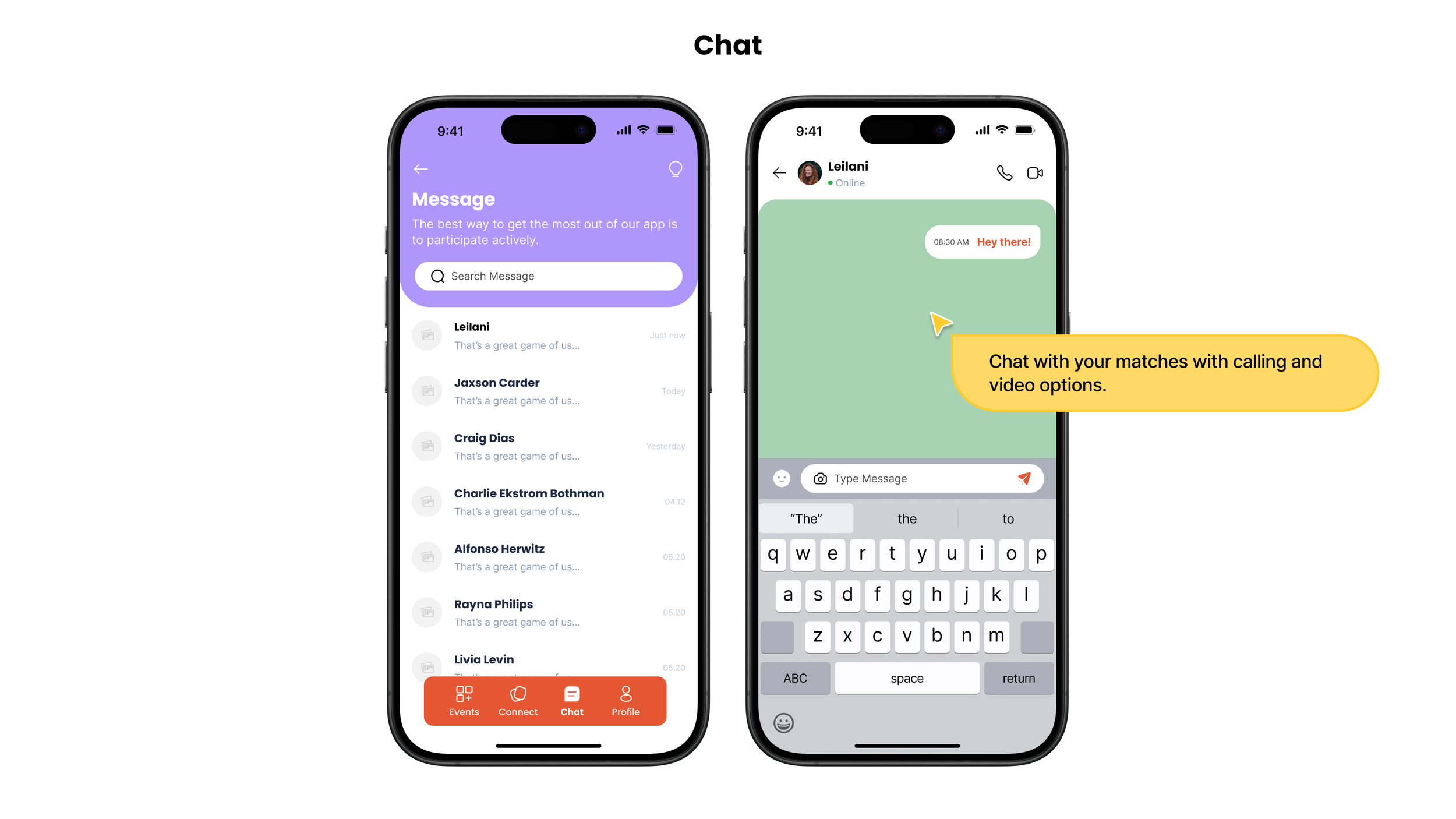
Messaging + interaction
User Flows
Systems Map
Mid-Fi Prototyping
Low → Mid → High Fidelity
Tested key concepts:
Space booking flow
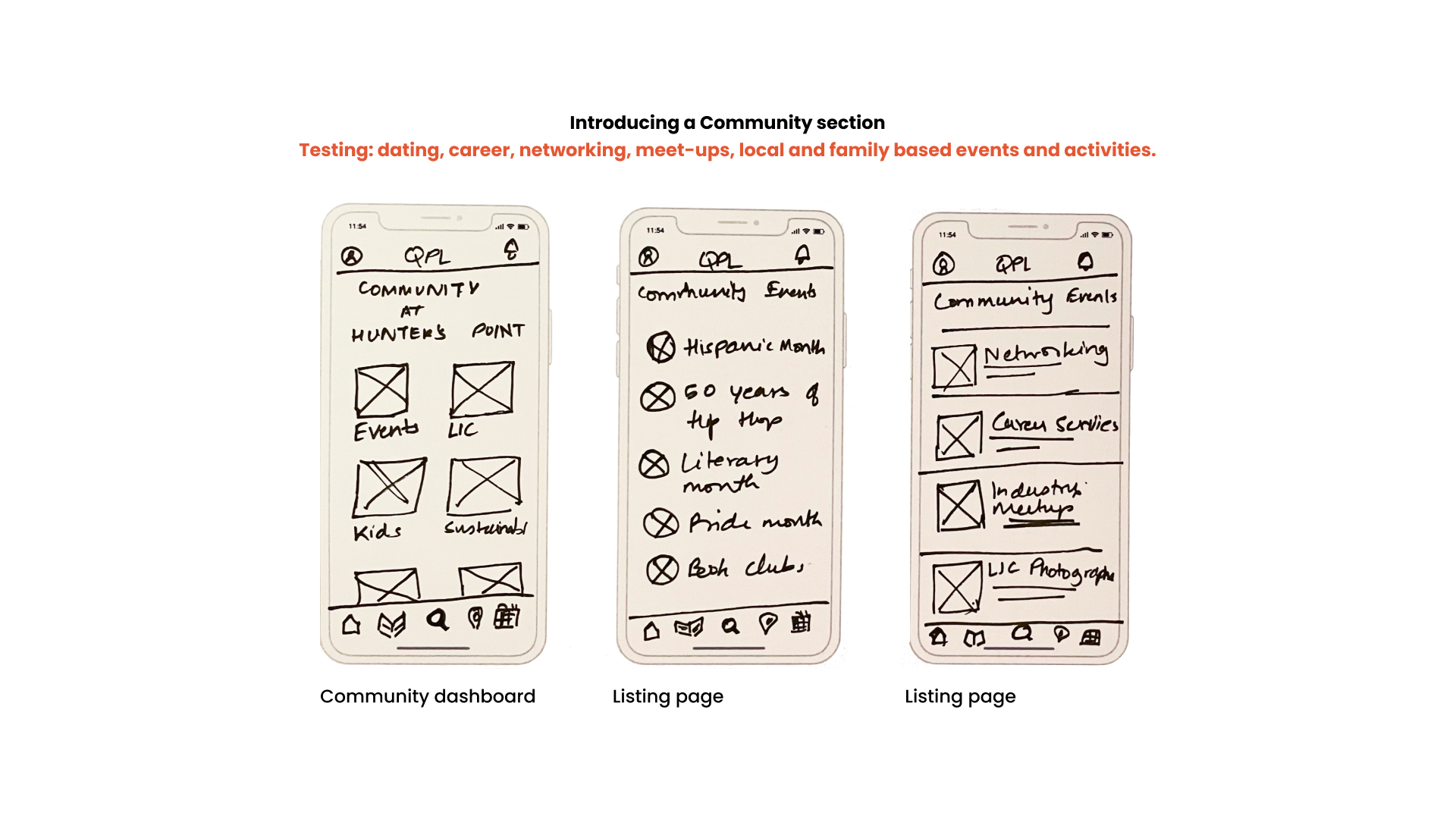
Community/event discovery
Personalization dashboard
Book checkout system
Iterated from a dating-centric concept → broader community model based on user feedback
Design System
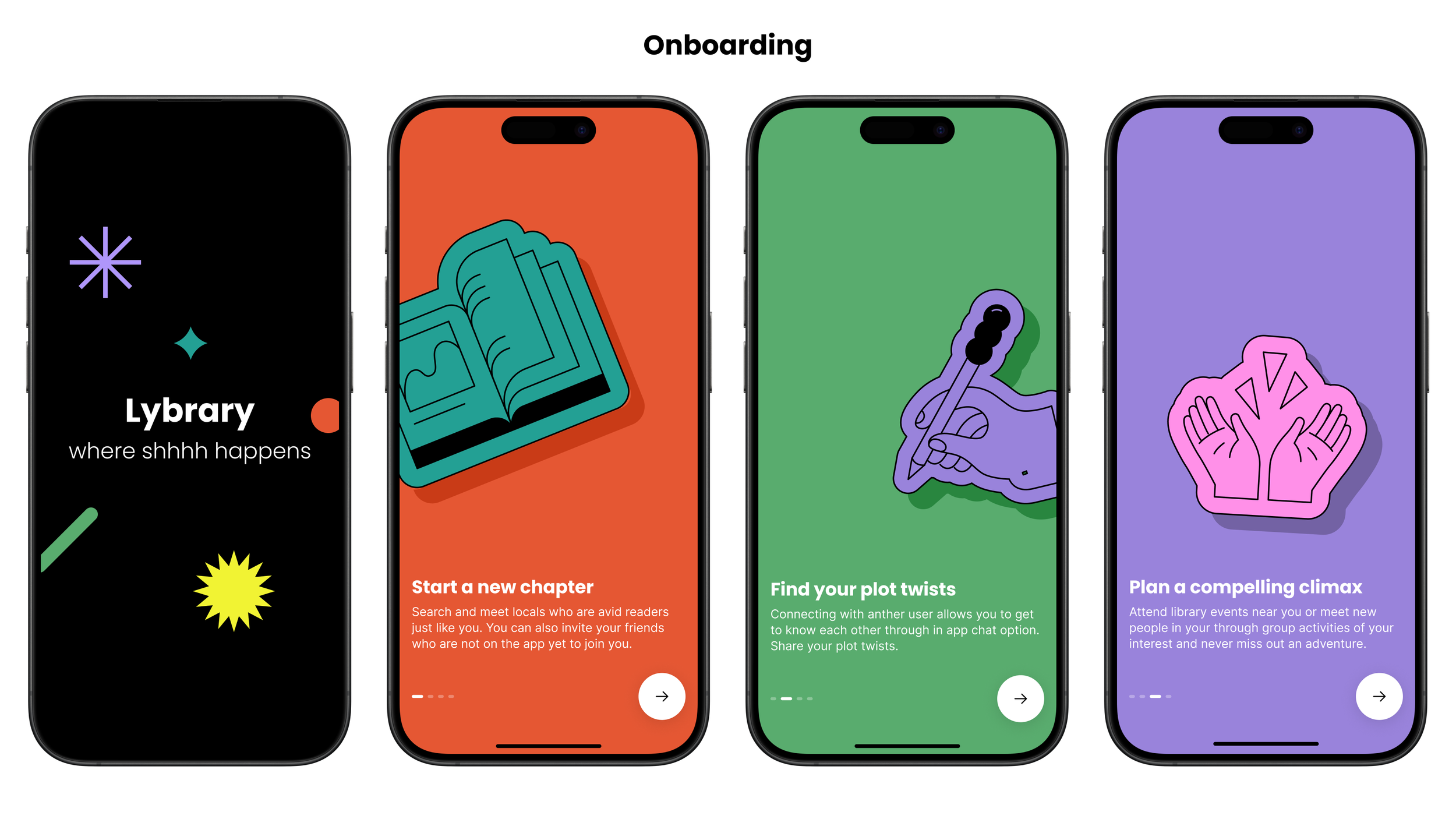
Intentionally moved away from institutional library aesthetics to:
Vibrant, playful UI (retro inspiration)
High-contrast visuals
Social-first interaction patterns
This aligns with the goal of making libraries feel alive, accessible, and culturally relevant.
Hi-Fidelity & Features
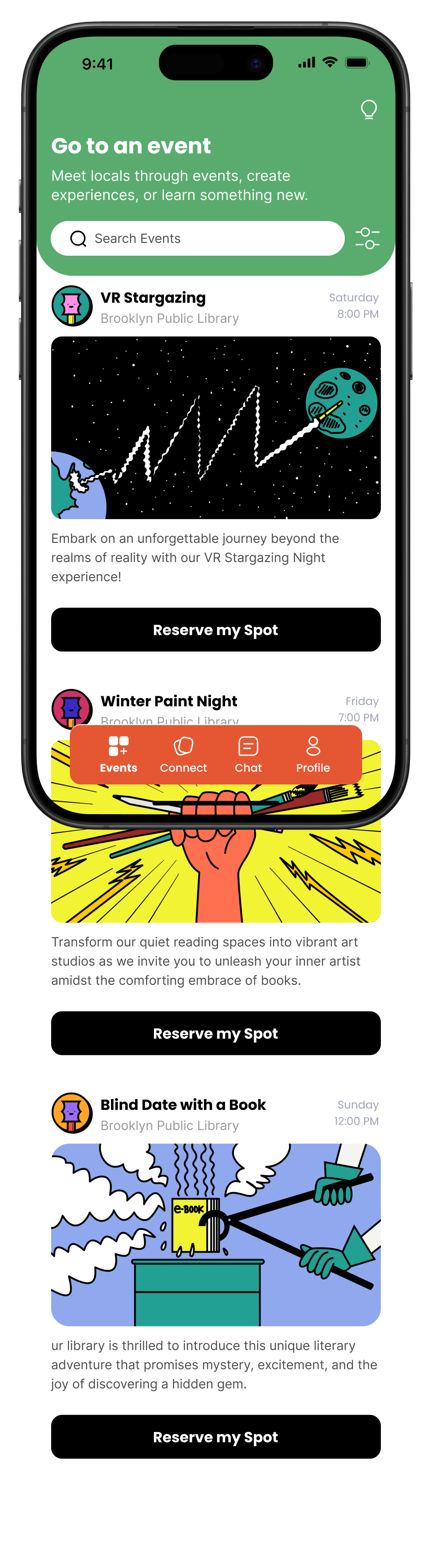
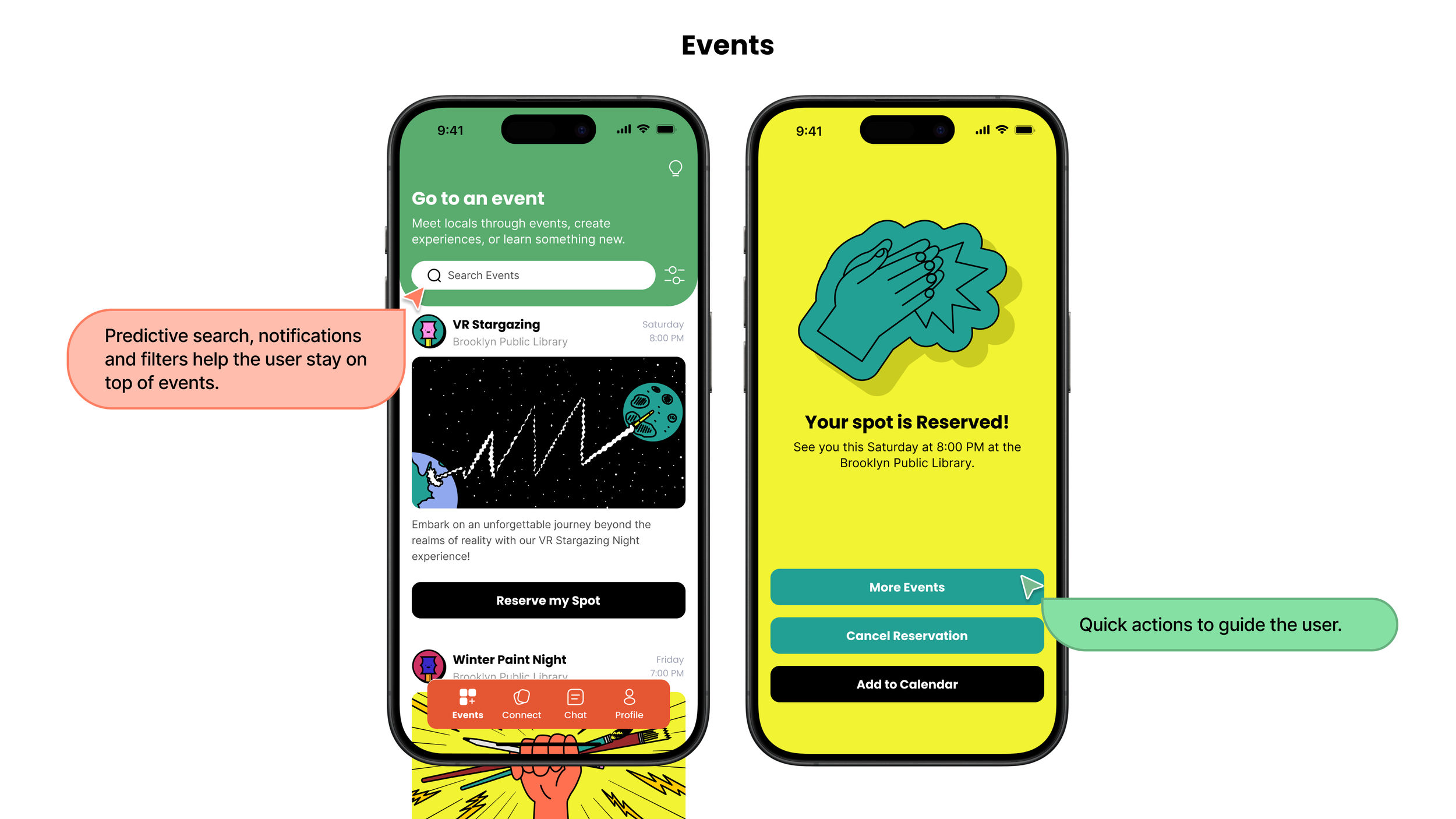
Event Discovery & RSVP System
Browse events by:
Interest
Location
Time
RSVP directly within the app
Calendar sync + reminders
Why: Increase visibility and participation in library programming
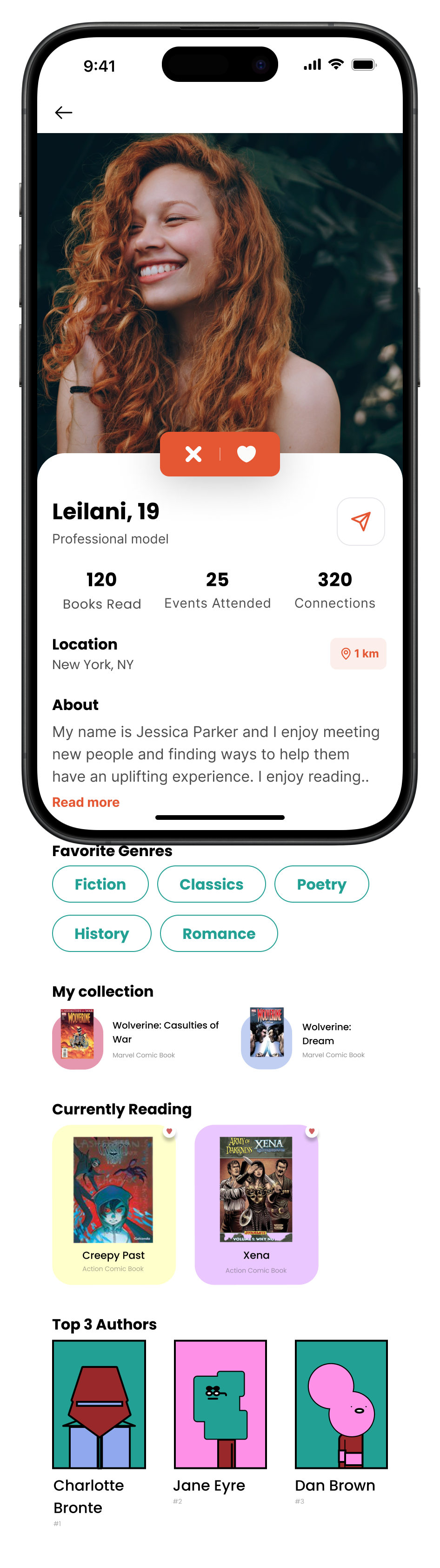
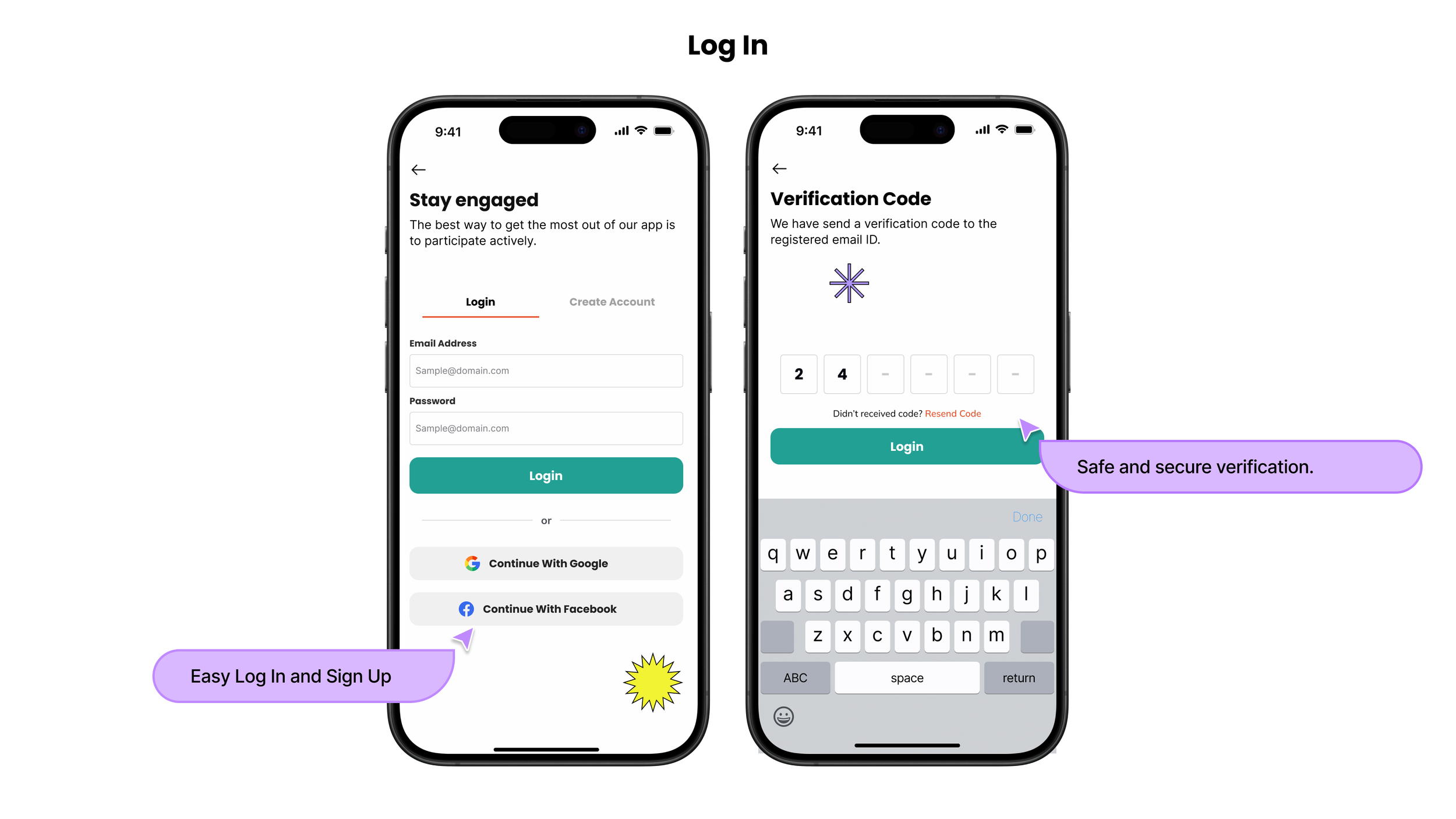
Get to Know Local Library Goes Personally
Connect with users via:
Favorite genres
Reading habits
Early exploration of:
Social matching
Shared-interest interactions
Why: Test social engagement within a low-pressure environment
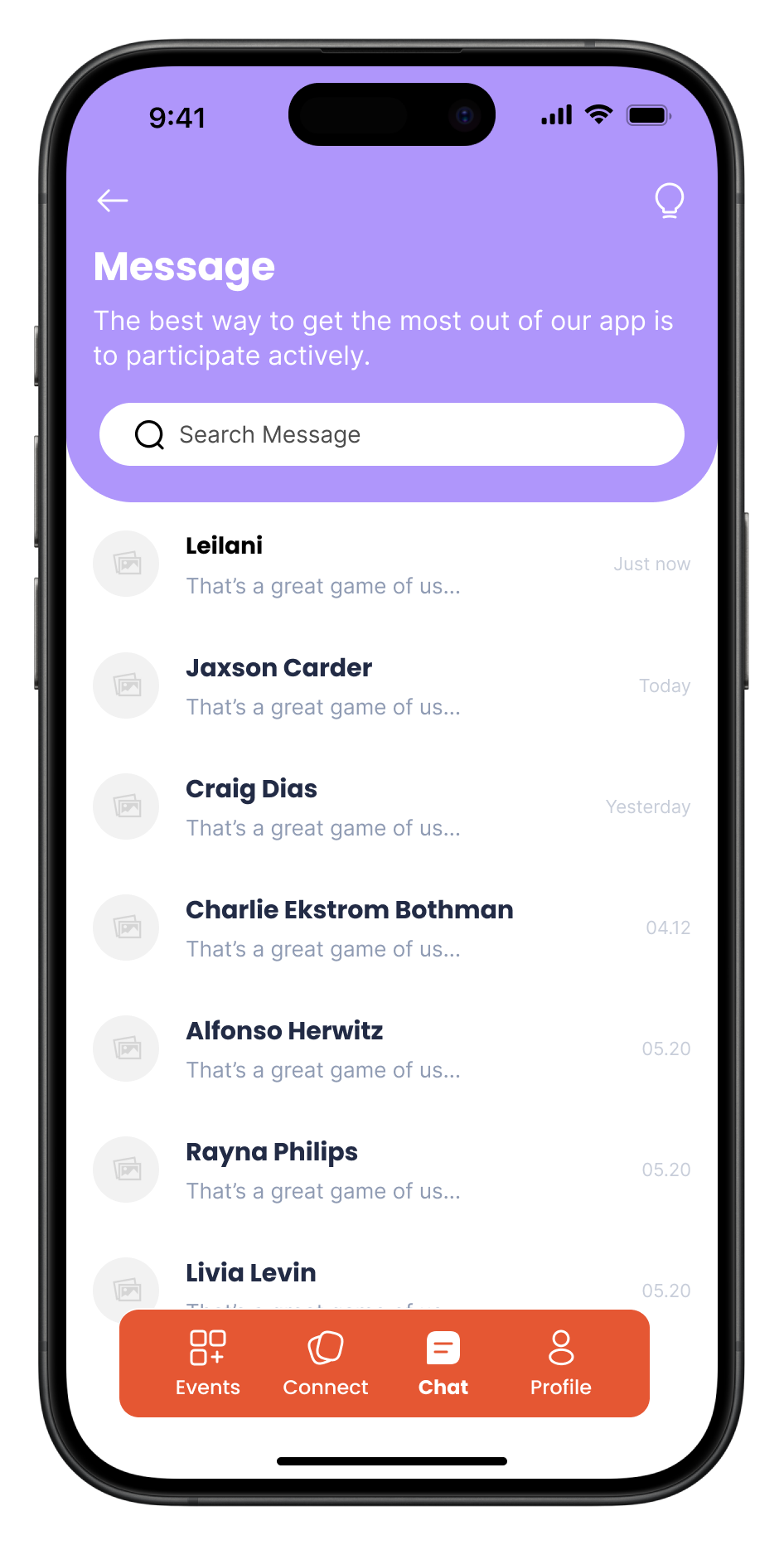
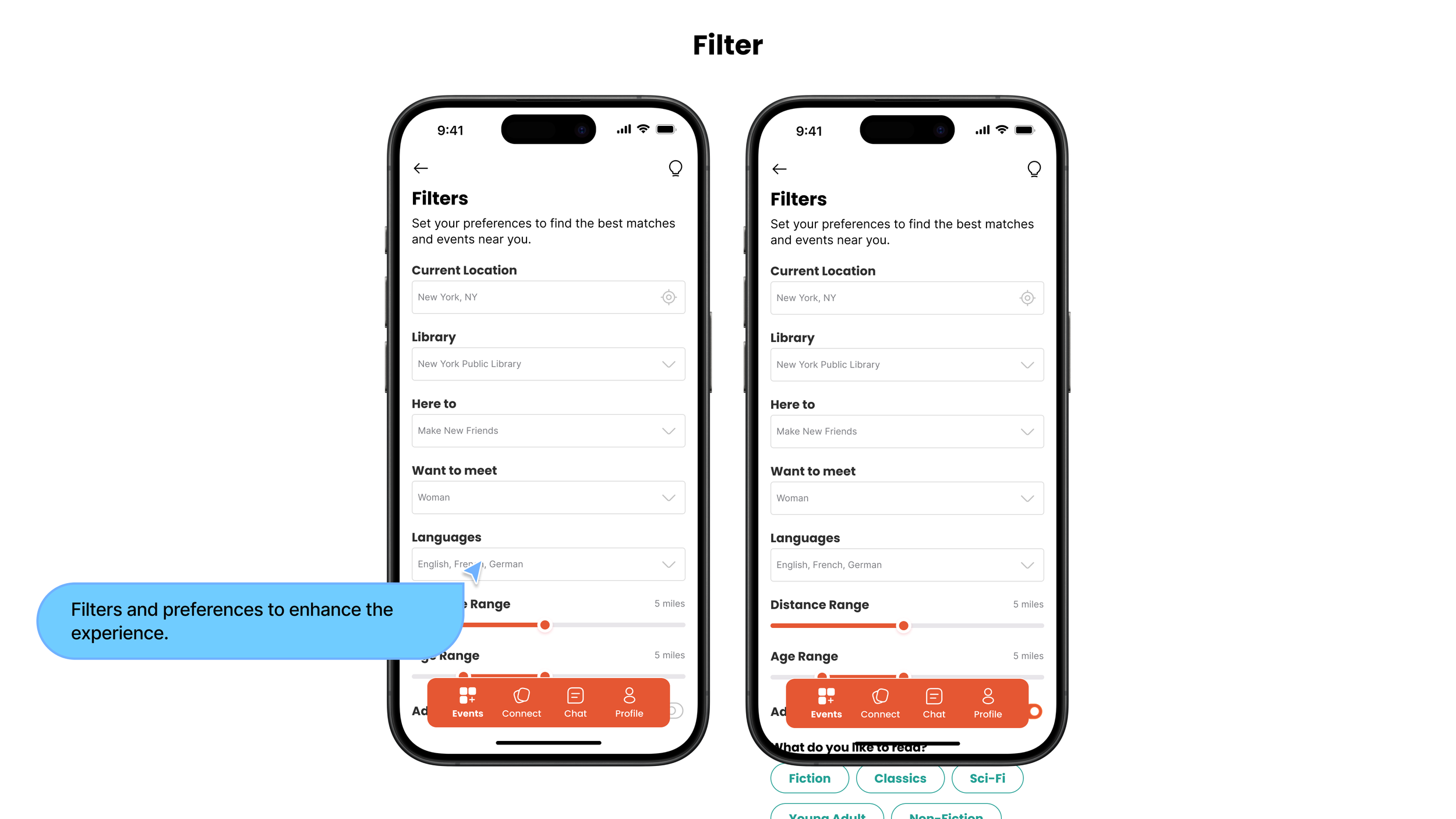
Personalized Dashboard
Tailored recommendations for:
Books
Events
Spaces
Based on user behavior and preferences
Why: Match modern expectations for personalization
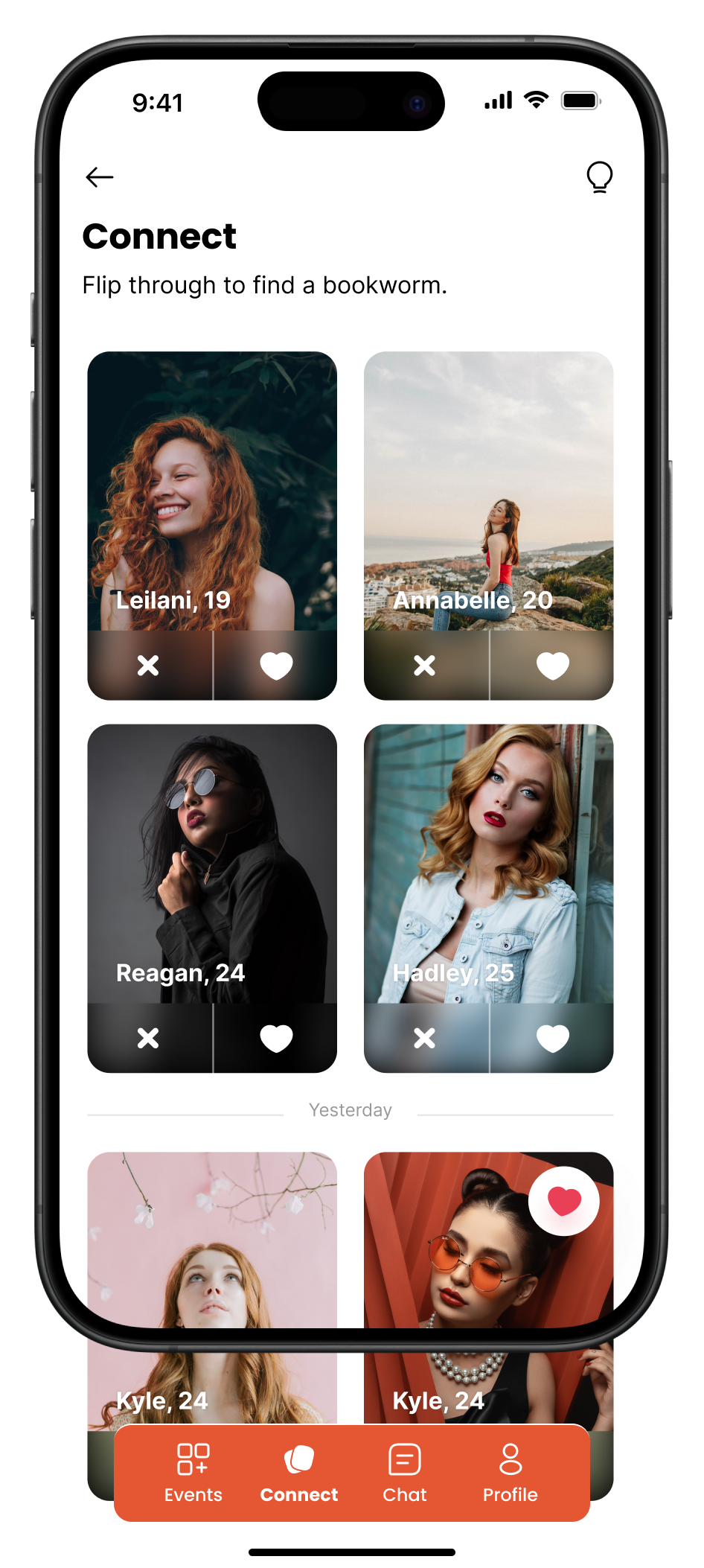
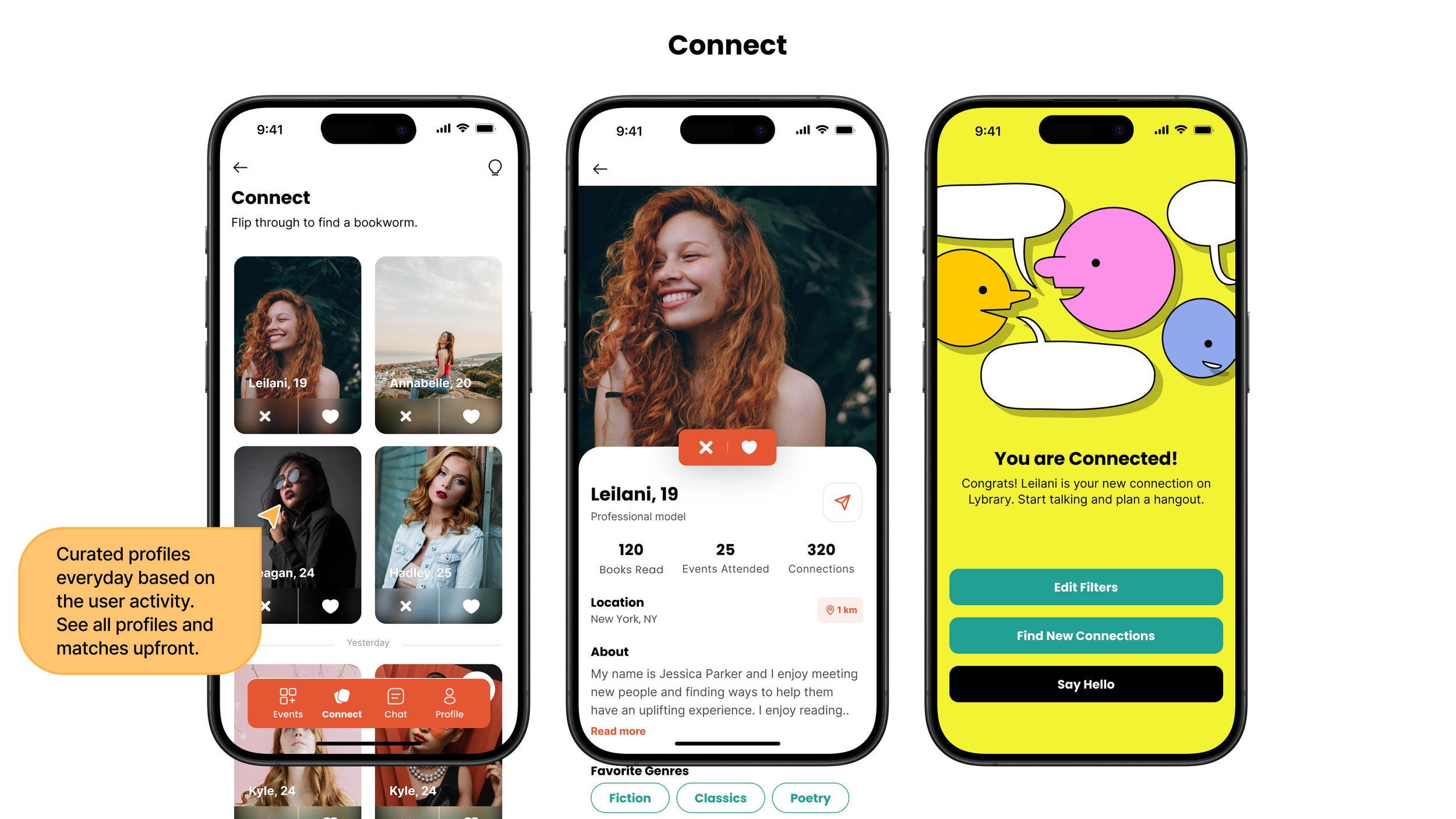
Community Layer (Social Discovery)
Connect with users based on:
Reading interests
Activities
Events
Explore:
Book clubs
Meetups
Local communities
Why: Extend libraries from passive spaces to active social ecosystems
Product Roadmap: Features to be Explored
-
Search and filter books
View real-time availability
Reserve or schedule pickup
Track reading lists and favorites
Why: Improve existing app utility beyond basic catalog browsing
-
Directions to:
Book locations
Rooms
Sections inside the library
Pickup guidance
Why: Bridge digital-to-physical experience gap
-
Live visibility into:
Seating availability
Quiet zones
Study rooms
Tech (computers, printers)
“Popular times” and crowd density indicators
Why: Reduce uncertainty and enable pre-visit planning
-
Reserve:
Study spots
Rooms
Equipment
Time-slot based booking with confirmation
Add to calendar
Why: Address lack of predictability in physical experience
Reflections
Impact (Conceptual / Expected Outcomes)
If implemented, Lybrary would:
Increase library footfall among young adults
Improve engagement with programs and events
Enable data-driven resource allocation
Strengthen libraries as third spaces (work + leisure + social)
Key UX Contributions
Reframed libraries as experience ecosystems
Identified behavior vs system mismatch
Introduced real-time + social UX layer
Balanced utility + delight
Challenges
Designing social interactions in a traditionally quiet environment
Limited research scope (single location bias)
Navigating concept direction (dating vs community)
Next Steps
Usability testing with live prototype
Validate feature prioritization (MVP vs V2)
Partner with public libraries for pilot testing
Expand research across multiple cities